 Nederlands
 English
 Français
 Deutsch
 Ελληνικά
 Italiano
 Português
 Русский
 Español
 Türkçe
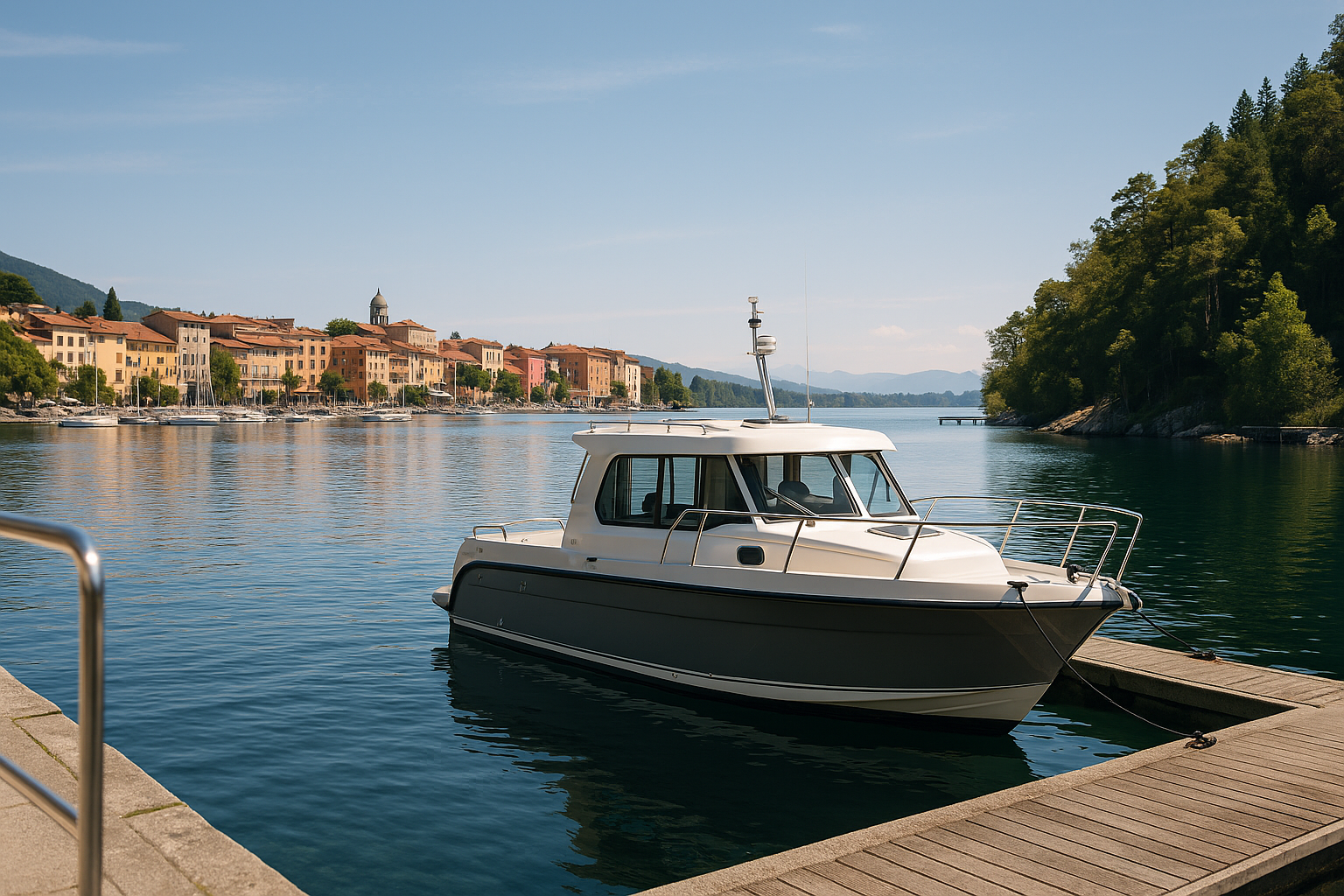
Many large luxury yachts fly the British flag because UK Part 1 registration gives owners a well-known European registration with strong legal title protection, and it is widely accepted by banks, insurers and port authorities. It suits pleasure yachts of 24 metres and above, and it requires the vessel to be owned by a British or otherwise approved owner or company. The practical consequence: financing, insurance and international cruising usually run more smoothly.
What British Flag Registration Actually Means
Flying the British flag is not just a decorative choice. It means the yacht is entered on an official register and carries documents that prove who owns it and where it is registered. For large yachts, the relevant register is the UK Part 1 register, administered by the UK Maritime & Coastguard Agency (MCA).
Part 1 is a register of title, not simply a list of boats. That distinction matters. The registration record shows the owner and any registered mortgage, which is why banks and insurers treat it as serious evidence of ownership.
This is different from the small-boat register used for leisure craft under 24 metres, which is simpler but does not carry the same weight for financing and international recognition.
Why Owners of Large Yachts Choose It
The appeal comes down to three practical things: credibility, finance and movement.
- Legal title protection. The register records ownership and mortgages, which reduces the risk of disputes and makes the yacht’s status clear to third parties.
- Bank and insurer acceptance. Lenders and insurers are familiar with Part 1 registration and generally prefer it for high-value vessels.
- International recognition. A British-registered yacht is recognised in most cruising grounds, which simplifies paperwork during travel.
- European base. For owners who cruise in Europe or keep a yacht in the Mediterranean, a UK registration is a familiar and accepted option.
For a yacht worth several million, these are not minor conveniences. They affect whether financing is approved, how easily insurance is arranged, and how smoothly the yacht clears into foreign ports.
Who Is Eligible to Register Under Part 1
Eligibility is one of the most misunderstood parts of the process. The yacht must be owned by a qualifying person or entity. In practice, that usually means British citizenship, British company ownership, or another approved category.
Many international owners do not hold British status themselves. The common route is to own the yacht through a UK Limited company that qualifies for registration. This is a legitimate and widely used structure, but it has a specific requirement that catches people out.
BlueWater creates and manages its own UK Limited company for this purpose. An existing company that a client already owns cannot be used for this registration route. Owners who assume they can simply use their current company often lose time before discovering this.
If you already hold a company and want to know whether it qualifies, that is a question to raise early, before any survey or measurement work begins.
The Requirements You Should Expect
Part 1 registration is more demanding than a simple leisure registration. The MCA requires evidence that the yacht is what it claims to be and that the ownership chain is clean.
- Vessel survey. A survey confirms the yacht’s identity and condition details required for registration.
- Tonnage measurement. This is often required, and it is one of the most common sources of delay when owners do not expect it.
- Proof of ownership. A complete, documented chain of title is needed. Gaps or missing bills of sale cause problems.
- Qualifying ownership. British or approved ownership, often through a UK Limited company set up for the purpose.
Tonnage measurement is not automatic for every yacht. Whether it applies depends on the vessel’s characteristics, so it is reviewed case by case rather than assumed either way. If you are unsure, treat it as a possibility to plan for rather than a detail to ignore.
How Long Registration Takes
For a complete and eligible application, standard processing is around three to four weeks. There is also an optional ultra-fast route of roughly three to four working days as an add-on.
These timelines run from receipt of a complete, eligible application. Incomplete documentation, a missing title link or an unresolved tonnage question will pause the clock, which is why preparation matters as much as speed.
If you have a completion date, a financing deadline or a planned cruising departure, the ultra-fast option can be worth considering. It does not remove the requirement for correct documents; it only shortens the processing stage once everything is in order.
The Mistakes That Cost Owners Time
Most delays in Part 1 registration come from a small number of recurring issues.
- Assuming an existing Limited company can be used. It cannot for this route; a company created and managed for the purpose is required.
- Underestimating tonnage measurement. Owners often discover this requirement late, after timelines have already been set.
- An incomplete title chain. Missing or unclear ownership documents are the most common cause of a stalled application.
Each of these is avoidable with an early review. The cost of catching them before submission is far lower than the cost of a delayed registration.
A Hypothetical Example
Consider an owner based outside the UK who has agreed to buy a 30-metre motor yacht and needs registration before a financing drawdown. The owner assumes their existing company can hold the yacht and registers it. In practice, the qualifying ownership requirement means a UK Limited company set up for the purpose is needed, and the title chain must be complete from the previous owner.
If the tonnage question is raised only after the survey, the timeline shifts. Starting with a documentation review before the survey keeps the three-to-four-week window realistic and avoids a scramble near completion.
What the Owner Should Do Next
The most useful first step is a personalised assessment of your yacht, your ownership situation and your documents. That review identifies whether tonnage measurement applies, whether the title chain is complete, and which ownership route fits.
- Gather ownership documents, including the full chain of title and any bills of sale.
- Confirm how the yacht will be owned, and whether a qualifying UK company is needed.
- Ask whether tonnage measurement is likely to apply to your vessel.
- Decide whether standard or ultra-fast processing matches your deadline.
- Request a formal quotation once the scope is clear.
BlueWater Registration Services manages the documentation, verification and submission to the UK Maritime & Coastguard Agency, and reviews tonnage applicability case by case. Because pricing depends on the vessel and the scope of work, a formal quotation is provided after assessment rather than quoted in advance.
Conclusion
The British flag is popular among large luxury yacht owners because Part 1 registration offers recognised legal title protection, broad acceptance by banks and insurers, and practical advantages for international cruising. The trade-off is a more demanding process: qualifying ownership, a survey, often tonnage measurement, and a complete title chain.
Get those elements right and the standard three-to-four-week timeline is realistic, with an ultra-fast option available as an add-on. Get them wrong and the delays are predictable and avoidable. BlueWater Registration Services can assist with further guidance, including a personalised assessment and formal quotation for your yacht.